The Problem?
We live in a culture that has eliminated play from adult life.
For the last two centuries, institutional schooling trained us to sit still, follow instructions, and become reliable workers. It's an outdated model that remains tangled deep in our psyches.
Play—the fundamental human attitude needed for creative engagement—was treated as something to outgrow. We were sold the lie that entertainment was the socially cool alternative to healthy play (because corporations make a lot of money off that lie).
As we get busy with our adult lives, instead of engaging in healthy play, we scroll, watch TV, and wait to consume the next sedative to help soothe the troubles of the modern world.
The psychological cost of this is devastating. Research by Dr. Stuart Brown shows that play deprivation correlates directly with increased anxiety, depression, and rigidity- not to mention a general loss of what makes us feel alive.
When we stop playing, we lose access to the exploratory mode of being that keeps us resilient, curious, and feeling
most ourselves.
Why Play Rx?
Most practices don't address what to DO.
Therapy helps you understand why you're disconnected (that's the most important first step!).
Mindfulness helps you observe the disconnection (a massively important tool).
Art classes assume you just need technical skill or a space to create (great for a pro).
None of them give you a structured practice for actively recovering the underdeveloped, authentic voice that lives deep underneath consciousness.
Play Rx puts you into action.
Play practices are a space for what most adults have lost access to:
- the capacity to express themselves without overthinking
- to create without the stress of producing
This helps us become more free and more tapped into our true, fiery nature.
Play Rx is not about entertaining you to make you forget your troubles, it is a practice space for the person you want to become.
What is a creative play practice?
Our work is simple & intentional:
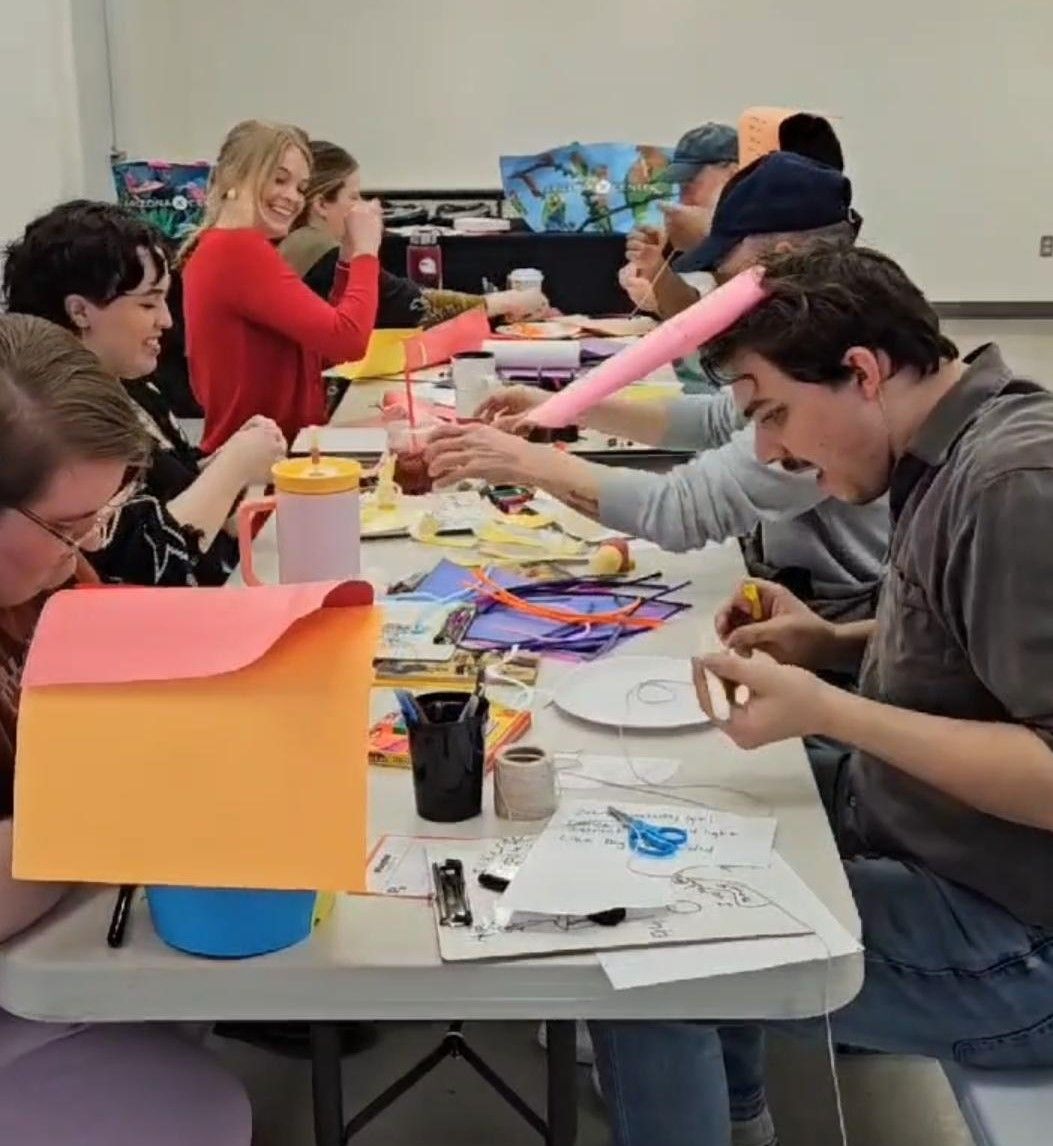
Players are given structured, creative prompts such as:
- sculpt with toothpaste
- write a bad poem
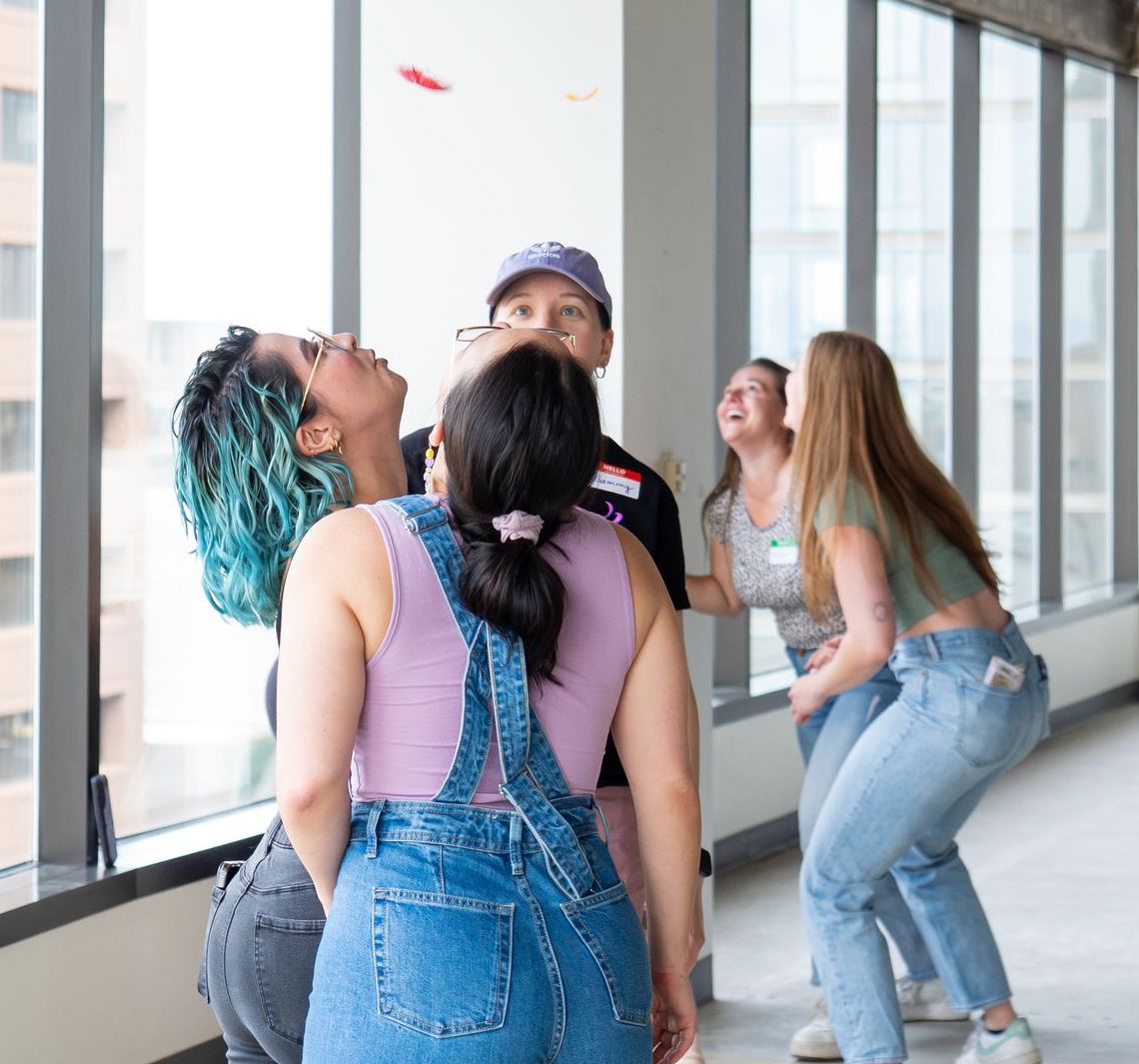
- throw an invisible ball between players
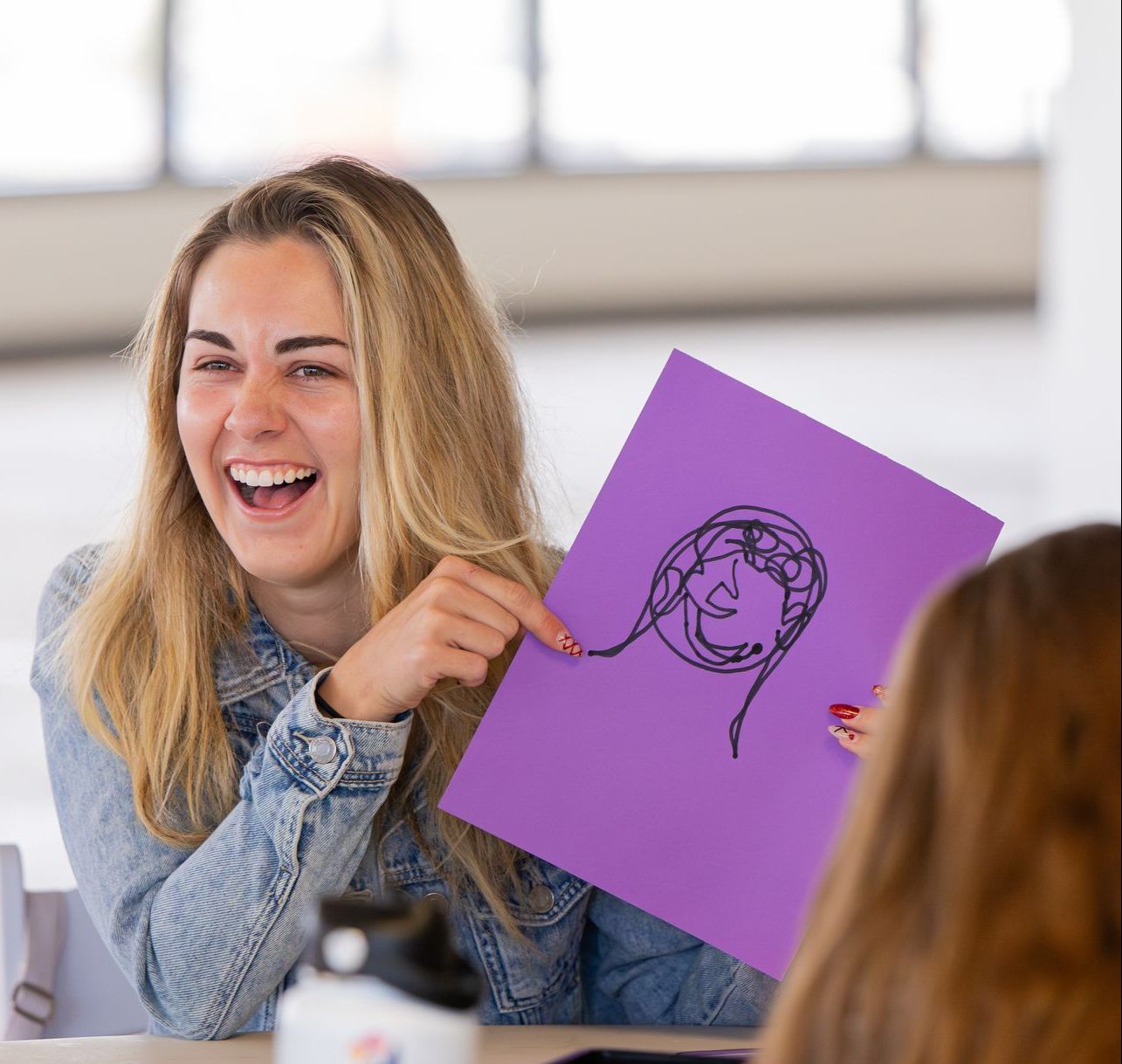
- scribble to music
- write meaningful, personal fairytales
- design your childhood dream room out of cardboard
- authentic relating games
Far from party games, these creative practices are designed to make your usual competencies irrelevant. When the task is inherently ridiculous, it helps loosen the chokehold your inner critic has on your creative process.
Because you can't do these any Play Rx practices "right," you finally stop managing how you're being perceived and just respond.
Many of our activities, despite sounding similar to the fun things you did in elementary school, are lightly informed by a rich history of existential psychology, IFS, Authentic Relating, drama/play therapy, and wisdom practices. We do not claim or advertise to be therapy, but desire to recognize the influence and philosophy of the work.
What emerges in this practice is the permission to be more honest with your buried creative and playful impulses.
What problems does play address?
- Fear around uncertainty
- Loss of connection with self
- Perfectionism/ strong inner critic
- Blocked self expression
- Rigidity/ stagnancy